
Does Creatine Cause Hair Loss? The Real Science
Posted by Maximus
on

So, does creatine actually make your hair fall out?
Let's cut right to the chase: No, there is no solid scientific proof that creatine directly causes hair loss. This whole fear-fest is built on a single, small study from 2009 that got wildly misinterpreted and passed around the gym like a game of telephone. The original message got seriously twisted.
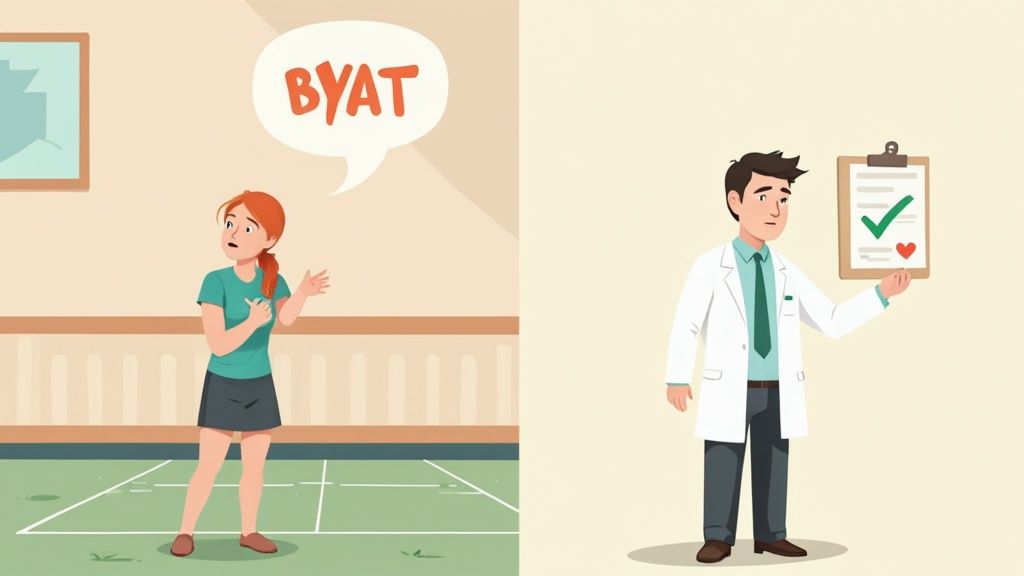
Picture this: You’re in the zone, crushing a new PR, and some well-meaning gym bro leans in with a solemn warning, "Hey man, go easy on that stuff... it'll make you go bald."
Suddenly, your next set feels like a high-stakes bet. Is this incredible boost in strength going to cost you your hairline? It's a classic scene, and it’s where this whole story usually kicks off—with locker-room gossip, not solid science. This rumor has become one of the most stubborn myths in fitness, making people second-guess one of the most studied and effective supplements on the market.
The anxiety is totally understandable. No one wants to trade bigger biceps for a receding hairline. But to get to the truth, you have to look at where the fear actually came from. The entire controversy can be traced back to one specific study involving college-aged rugby players.
Here’s the kicker: that study never actually measured hair loss. It just flagged a change in a hormone associated with it. That’s it.
Let's quickly clear the air before we dive deeper. This table breaks down the gym-floor rumors versus what the science says.
| The Myth | The Scientific Reality |
|---|---|
| "Creatine causes hair loss." | False. No study has ever established a direct cause-and-effect link between creatine supplementation and hair loss. |
| "Creatine makes your DHT levels skyrocket." | Misleading. A single 2009 study saw an increase in DHT, but it stayed within normal clinical ranges. A dozen+ studies since have not replicated this finding. |
| "If you take creatine, you'll go bald." | False. Hair loss is primarily driven by genetics and sensitivity to DHT. Creatine isn't the trigger for those predisposed to male pattern baldness. |
This table is just the starting point. It’s a snapshot, but the real story is in the details.
In this guide, we're going to put on our lab coats and do a proper investigation. We will:
My goal here is to give you the confidence to make an informed decision, based on real evidence instead of whispers by the squat rack. You deserve to chase your goals without getting sidetracked by fear. Ready to swap the myths for the facts? Let's get into it.
Every gym myth has an origin story, and the "creatine causes hair loss" saga is a classic. The whole thing traces back to a single, small study from 2009 that looked at a group of college-aged rugby players. This is the "patient zero" of the entire controversy.
So, let's put on our detective hats and dig into what actually happened.

Picture a lab with just 20 male rugby players. Researchers split them into two groups: one got creatine, the other got a sugar pill. They did this for three weeks, but here’s the kicker—they weren't even looking at hair. Their goal was to see what happened to certain hormone levels.
After the three weeks, they noticed one specific change that made everyone's ears perk up: a spike in a hormone called dihydrotestosterone (DHT). And if you know anything about hair loss, you know DHT is the usual suspect in male pattern baldness.
So, what was the big deal? The study reported that after a seven-day "loading phase," the players taking creatine saw their DHT levels jump by a whopping 56%. That single number became the "smoking gun" that has fueled more than a decade of gym-floor paranoia.
It’s not hard to see how that one finding spiraled out of control. You hear "creatine increases a hair loss hormone by 56%," and your mind immediately pictures a shower drain full of your own hair.
But context is everything here.
This study had some serious limitations. For starters, it never actually measured hair loss or even looked at the health of the hair follicles. The sample size was tiny, and it only tracked changes over a very short period.
Relying on this one study to swear off creatine is like judging an entire movie based on a 10-second trailer. You're just not getting the full picture. It's much more useful to understand the bigger story of how creatine works in the first place.
Here are the critical details that get lost in the game of gym-bro telephone:
In a nutshell, the entire creatine-hair-loss scare is built on a study that didn't even study hair loss. It was a one-off hormonal finding that has since failed to be reproduced, making it a classic case of scientific misunderstanding.
Understanding this origin story is key. It helps us see why the fear started, but more importantly, why the mountain of modern evidence tells a very different—and much less scary—tale.
Alright, let's talk about what happened after that one 2009 study sent the gym world into a panic. Science didn't just pack up its lab coat and go home. That single, isolated finding kicked off a huge wave of new, much better research. Think of it as the main event: modern science stepping into the ring to settle the score.
For years now, researchers have been putting creatine through the wringer in rigorous, controlled trials—the real gold standard of scientific proof. They’ve measured everything from hormone levels to actual hair counts, and the results paint a completely different picture than the one you'll hear in the locker room.
It’s time to see what happens when a myth meets a mountain of hard data. The consensus from all this modern research is crystal clear: the connection between taking normal doses of creatine and losing your hair is incredibly weak. If it even exists at all.
Since that original study dropped, more than a dozen high-quality studies have dug into how creatine actually affects hormones like testosterone and DHT. And unlike that first rugby study, these new trials were way more thorough, often lasting longer and using more people.
The results? They've been incredibly consistent. The vast majority of these studies found no statistically significant increase in DHT when people took creatine. This is a direct contradiction to the one-off finding that kicked this whole scare off in the first place.
The scientific community is pretty much on the same page: that 2009 study was an outlier, not the rule. So many follow-up studies have failed to get the same dramatic DHT results, which strongly suggests it was a fluke.
This consistency is a huge deal. It means the initial panic was based on a single piece of evidence that nobody could ever reproduce. It’s like hearing one weird bump in the night and declaring your house haunted, only to have a dozen inspectors come through and find nothing but creaky floorboards.
The final nail in the coffin for the "creatine causes baldness" debate came from a recent, definitive study. This landmark 12-week randomized controlled trial was designed specifically to look at the link between taking creatine and hair loss.
The results? There were no significant differences in DHT levels or the DHT:testosterone ratio between the creatine group and the placebo group. Zero. And even more importantly, the researchers saw no meaningful changes in hair growth that could be blamed on creatine. You can read the full research about these groundbreaking findings to see the data for yourself.
This study gives us the most direct and solid evidence we have today, shutting down the claim that creatine causes hair loss in healthy young men. While it's great to see science confirm this, it's also worth knowing about the other potential side effects of creatine—all of which are pretty minor and easy to handle.
So, where does that leave us? With a giant pile of modern, high-quality evidence showing that creatine is safe for your hairline. The science has moved on, and the verdict is in: you can build your strength without sacrificing your strands.
Alright, so if creatine isn't the big bad wolf we thought it was, what is? Let's pull the mask off the real villain behind most male hair loss. Spoiler alert: you can't buy it in a tub. The primary driver is, and almost always has been, your genetics.
Think of it this way: your DNA is programmed with a "hair loss switch" from the day you were born. That pesky hormone we've been talking about, DHT, is the key that can flip that switch. But—and this is the most important part—the key only works if you have a very specific type of lock.
Let’s imagine two guys, Alex and Ben. Both hit the gym, both supplement with creatine, and both have DHT floating around in their system.
This simple analogy completely reframes the creatine debate. The problem was never the key (DHT) itself, but the genetically-determined lock (your follicles' sensitivity) you were born with. Creatine didn't install that lock; your parents did.
This is exactly why you see guys with a glorious mane who’ve used creatine for a decade, while other dudes who've never touched a supplement start seeing their hairline retreat in their twenties. It all comes back to that genetic switch. While creatine's role is still up for debate, understanding the real triggers like what causes male pattern baldness is crucial.
The bottom line is that genetics load the gun, and hormones like DHT might pull the trigger. But if the gun isn't loaded, the trigger is just a piece of metal.
For those who are genetically predisposed to hair loss, anything that could nudge DHT levels might speed up a process that was going to happen anyway. This doesn't make creatine the cause, but it’s a fair and honest way to look at it, and it's essential for making an informed decision about your body.
Knowing this should be empowering. Instead of fixating on a supplement with decades of research backing its safety and effectiveness, you can focus on the factor that actually matters. Your genetics are the star of this show; everything else, creatine included, is just a supporting character. That's the key to building a smart, worry-free fitness plan.
Alright, we’ve sifted through the science and pointed the finger at the real villain in the hair loss story (looking at you, genetics). So, let's get down to brass tacks: how do you add creatine to your routine without constantly checking your reflection for a receding hairline?
It's time to move from "what if" to "how-to."
First up, let's talk about the dose. You've probably heard guys in the gym talking about a "loading phase," where they slam back 20 grams of creatine a day for a week. Honestly? That's overkill for most of us. The real sweet spot, backed by a mountain of research, is a simple, no-fuss 3-5 grams per day. That’s it.
This slow-and-steady method fills up your muscle's creatine stores over a few weeks without putting your system into overdrive. Think of it like filling a bucket. You can blast it with a firehose and splash water everywhere, or you can use a steady tap. Both get the job done, but one is a lot more sensible.
Here's a hard truth: not all creatine is the same. When you're picking a supplement, you want purity, period. Look for a clean, high-quality product that isn't packed with mystery fillers or sketchy additives. This is exactly why we developed our Three-Atine Creatine Monohydrate—it's engineered for one purpose: to deliver maximum effect without any of the junk.
The infographic below really drives home the point that genetics and DHT are the true architects of hair loss, which helps put this whole supplement debate into context.

As you can see, your family tree is the real root of the issue.
By sticking to a smart daily dose and a pure product, you're siding with what modern research shows is both safe and effective. Recent gold-standard studies confirmed that taking 5 grams daily didn't move the needle on hair density or the hormones tied to hair loss. It seems the creatine-hair loss connection is more gym-floor rumor than scientific reality, especially if male pattern baldness doesn't run in your family.
Making it part of your routine is a breeze. Just toss your daily dose into a post-workout shake or whatever you're drinking. Consistency crushes complicated timing strategies every single time. For a full playbook on getting it right, check out our guide on how to take creatine effectively.
The bottom line is simple: Stick to a 3-5 gram daily dose of a top-shelf creatine monohydrate, drink plenty of water, and get back to focusing on your training. This is the smart play that lets you reap all the rewards with total peace of mind.
Alright, let's cut through the noise and get straight to it. After digging through the science, busting the myths, and taking a hard look at the genetics, what’s the final word? Does creatine make your hair fall out?
The answer is a clear and resounding no.
The entire panic is built on a shaky foundation: a single, small study from 2009 that got blown way out of proportion and has been haunting gym forums ever since.
Since then, a mountain of modern research has piled up, and it all points in the same direction. Study after study has looked for a connection between creatine and hair loss, and they've all come up empty. The science has moved on, and it's time we did too. Your gains in the gym don't have to cost you your hairline.
The choice you're facing isn't between building muscle and keeping your hair. It's between believing in debunked gym lore and trusting a decade of solid scientific evidence. Go with the data, not the drama.
At the end of the day, it's your genetics—not your supplement scoop—that holds the blueprint for your hair's future. If you're tired of worrying and ready to focus on your performance, the path forward is pretty simple.
Want to dive even deeper? This resource offers a fantastic breakdown of Creatine and Hair Loss: The Real Answer.
It's time to stop letting outdated fears hold back your progress. Make the smart, informed choice for your goals and invest in your strength with a product you can trust. Grab your Three-Atine Creatine today.
Alright, let's tackle those lingering questions you've probably been Googling. Think of this as a quick, no-nonsense chat to put your mind at ease so you can focus on what really matters: your workouts.
Here’s the deal: if male pattern baldness is in your family tree, your genetics are driving the bus. That’s the single most important factor, period.
While that one-off 2009 study got everyone spooked about a temporary DHT bump, a mountain of research since then has failed to find any solid link between standard creatine doses and accelerated hair loss. The best plan? Stick to the scientifically-backed dose of 3-5 grams per day. Your supplement scoop isn't going to override your DNA.
Don't get lost in the marketing hype. Creatine Monohydrate is the undisputed champion, backed by decades of research for both its effectiveness and its safety profile.
Newer, pricier forms like Creatine HCL or Ethyl Ester just don't have the same track record. The whole hair loss theory is based on how creatine works in the body, not a specific chemical version of it. For both top-tier results and your own sanity, a simple, high-quality Creatine Monohydrate is always the smartest choice.
Keep it simple: The most studied and proven form of creatine is also the one you can trust the most. Don't overpay for fancy alternatives with less data behind them.
Let's cut through the noise. The real, proven side effects of creatine are surprisingly boring—and mostly harmless.
The most common effect is a little extra water retention in your muscles. Guess what? That's part of how it works its magic, helping you look fuller and lift heavier! A few people might get a minor stomach ache if they take it on an empty stomach, but drinking enough water usually sorts that right out. After decades of rigorous scientific study, the verdict is clear: for healthy individuals, creatine is one of the safest and most effective supplements on the market.
Ready to leave the myths behind and get back to building serious muscle? Crazy Muscle delivers the pure, powerful creatine you need to hit your goals with confidence.

Sign up and save 10% off your next order